

HONG KONG – March 8, 2026 – As International Women’s Day (March 8) approaches, followed by World Sleep Day (March 13), a comprehensive analysis of two annual surveys conducted by HelperChoice, a Hong Kong-based ethical recruitment platform, exposes a deepening crisis of sleep and rest deprivation among migrant domestic workers (MDWs) in Hong Kong. The vast majority of MDWs are women, making these findings particularly poignant during a time dedicated to women’s rights and well-being. Combining data from the April 2025 (n=341) and March 2026 (n=138) surveys, representing a total of 479 migrant domestic workers, the findings reveal a disturbing trend of increasing lack of fixed rest periods, inadequate sleep, and associated health consequences.
The Escalating Rest and Sleep Crisis
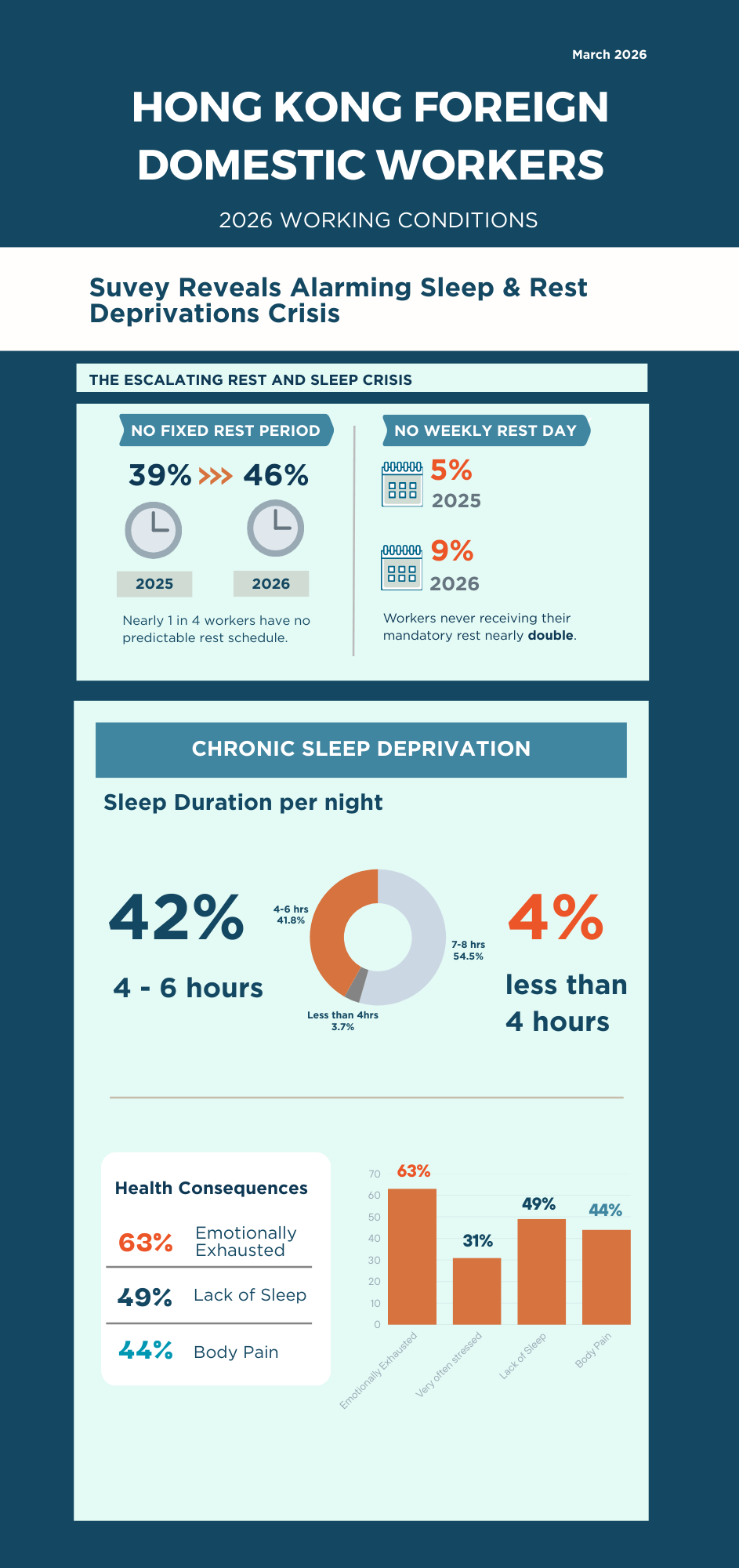
The combined data unequivocally points to a severe and escalating problem with MDWs’ ability to obtain adequate rest. The proportion of MDWs reporting no fixed rest period has surged from 39% in 2025 to 46% in 2026, a significant 7% increase. This means nearly half of all MDWs surveyed are operating without a predictable schedule for their essential downtime. More critically, the percentage of workers who never receive their mandatory weekly rest day has nearly doubled, from 5% in 2025 to an alarming 9% in 2026.
This absence of structured rest also impacts sleep patterns. While the 2025 survey found that 48% of MDWs slept only 4-6 hours, the 2026 data shows a persistent issue, with 42% still reporting 4-6 hours of sleep, and an additional 4% sleeping less than 4 hours. Such chronic sleep deprivation is a serious health concern, contributing to physical and mental exhaustion.
Profound Health and Well-being Consequences
The consequences of this pervasive lack of rest and sleep are dire for the MDW community. The 2026 survey, which delved deeper into health metrics, found that a staggering 63% of respondents reported feeling stressed or emotionally exhausted due to work, with 31% experiencing these feelings very often. Furthermore, 49% experienced body pain or injury, and 44% explicitly reported a lack of sleep as a significant issue. These figures underscore a direct link between inadequate rest provisions and the deteriorating physical and mental health of MDWs.
When asked, “If you could improve one aspect of your living or working conditions, what would it be?” an anonymous domestic worker said:
“If my food and rest had been adequate, I wouldn’t have broken my contract. I was capable of working, but I struggled because of that, and my employer was always angry, even though I knew my work was proper and of good quality.”
This powerful testimony underscores how persistent and ongoing the issues of inadequate rest remain.
Raymond Sze, General Manager of HelperChoice, states:
“We’re really happy to see that the overall working conditions of migrant caregivers in Hong Kong are good; nearly 70% of the helpers have a private room! But we are pretty concerned about this minority reporting bad resting conditions. We would remind the employers that a good living arrangement is key to a long-lasting and healthy work relationship. Migrant domestic workers often work long hours and need to be able to rest for their physical and mental health, but also to be able to provide the best care to the families that employ them.”
Our suggestion: Implement Fixed Rest Days and Times
HelperChoice encourages all stakeholders – employers, recruitment agencies, and the Hong Kong government – to collaboratively work towards implementing and supporting policies that ensure fixed rest days and predictable rest times for all migrant domestic workers. By providing consistent and adequate rest, we can foster a healthier, more sustainable, and more productive environment for both MDWs and the families they support. We suggest the following measures:
•Establishing Mandatory Fixed Weekly Rest Days: Employers are encouraged to provide a clearly defined, non-negotiable weekly rest day that supports the worker’s well-being and legal rights.
•Ensuring Guaranteed Daily Rest Periods: Implementing clear guidelines for daily rest hours will ensure MDWs have sufficient time for sleep and personal activities, contributing to their overall health.
•Strengthening Support and Awareness: The government and agencies can enhance monitoring and provide resources to educate both employers and MDWs on the importance of rest and the legal provisions safeguarding it, promoting a culture of respect and compliance.
This approach aims to create better conditions, recognizing the fundamental right to rest for every worker. As we approach International Women’s Day and World Sleep Day, HelperChoice calls on all to reflect on the critical importance of these issues for the well-being and dignity of migrant domestic workers.
About HelperChoice
HelperChoice is a social impact platform dedicated to ethical hiring practices for domestic workers through fair working conditions, transparent recruitment, and direct connections between employers and migrant workers.
Press Contact
Raymond Sze – raymond@helperchoice.com