An Employer Guide to Creating a Domestic Worker Employment Contract in Singapore

Updated on 18 March 2026

An employer guide to creating a domestic worker employment contract in singapore (1)

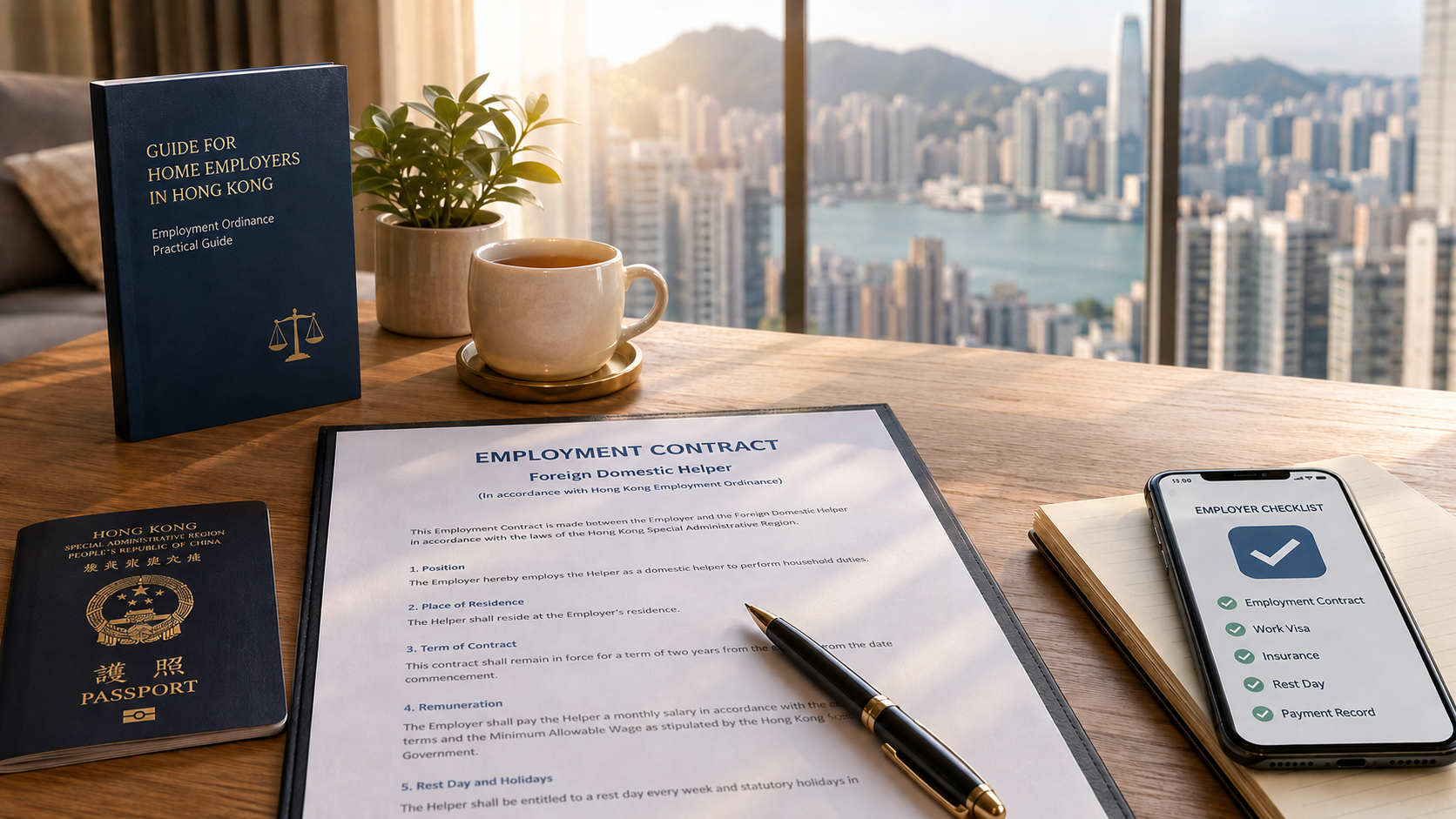
When hiring a domestic helper in Singapore, one question often comes up: “Do I really need an employment contract?”

Technically, the answer is no. Under Singapore regulations, foreign domestic workers (FDWs) are not covered by the standard Employment Act, and there is no strict requirement from the Ministry of Manpower (MOM) to create a formal employment contract.

That’s because many of the key rights and responsibilities—such as rest days, accommodation, and medical care—are already governed by the Work Permit conditions.

But in practice? Having a clear, well-written contract is one of the best things you can do—for both you and your helper.

Contract Requirements from MOM

While MOM does not mandate a standard employment contract, it strongly encourages employers and helpers to agree on clear terms in writing.

Think of the contract as your shared understanding. It helps prevent confusion later on, especially in a live-in arrangement where boundaries can easily blur.

A good contract typically includes:

What matters most is not just what’s written—but that both you and your helper understand and agree to it.

A Small but Important Reminder

Even though you can draft your own contract, it must always follow MOM rules.

For example:

  • You cannot include duties outside household work

  • You cannot override work permit conditions

👉 Refer to MOM employment rules here:
https://www.mom.gov.sg/passes-and-permits/work-permit-for-foreign-domestic-worker/employers-guide/employment-rules

Should You Create One Yourself?

Yes—you can. Many employers:

  • Use templates or sample contracts from Association of Employment Agencies of Singapore (AEAS) or CaseTrust

  • Ask agencies to prepare one

  • Or draft a simple agreement themselves

What matters is that the contract is clear, fair and mutually agreed.

Why It’s Worth It

Even if it’s not legally required, a contract can prevent misunderstandings, set expectations early, help resolve disputes if they arise and support administrative processes (e.g. embassy verification)

See also: Maid Employment Law

Compulsory Safety Agreement

One requirement that is mandatory is the safety agreement

When hiring a new or transfer helper, both employer and helper must sign this agreement as part of the work permit process.

This document focuses mainly on window cleaning safety and high-rise household risks

Important to Note

  • It applies to all nationalities

  • It must be signed during hiring

  • It is not required for renewals

This reflects Singapore’s strong emphasis on domestic worker safety—especially in high-rise homes.

Requirements from the Philippine Embassy

If you are hiring a Filipino domestic helper, there are additional contract requirements set by the Philippine government through the Embassy of the Philippines.

This is where things become a bit more structured.

Maid Employment Contract in Singapore

Standard Employment Contract

The Philippine Embassy requires employers and helpers to use a standard employment contract for verification.

This contract typically includes:

  • Minimum salary (around SGD 570 and above)

  • At least 1 rest day per week

  • At least 8 hours of continuous rest daily

  • Fair and humane treatment

It also clearly states that:

  • Employers must not withhold passports without consent and helpers must be allowed to communicate freely with their families

Employer Undertaking

Employers are also required to sign an undertaking, confirming that they will cover employment-related cost, treat the helper fairly and ensure proper living conditions

Updated Clarifications (2026)

Some older processes mentioned a separate $7,000 Philippine bond

👉 This is no longer a standard requirement in all cases and may vary depending on embassy procedures.

What remains essential is contract verification, proper documentation and compliance with Philippine deployment rules

Why This Matters

Without a verified contract, the helper may not be allowed to leave the Philippines or may not be able to return to Singapore after home leave. So while it may feel like extra paperwork, it’s actually a protective step for both sides.

Final Thoughts

Creating an employment contract for your domestic helper may not be mandatory—but it is one of the most important steps you can take to build a healthy working relationship.

When expectations are clear from the beginning, it becomes much easier to:

At HelperChoice, we always encourage employers to approach hiring not just as a process—but as the start of a partnership.

Because at the end of the day, a strong working relationship doesn’t come from rules alone—it comes from clarity, respect, and mutual understanding.

Contact us for your visa processing requirements or maid search! 

You might also be interested in:


Spread the word

Leave a Reply

Your email address will not be published. Required fields are marked *