

Discovering that your Foreign Domestic Helper (FDH) has left your home unannounced—commonly referred to as “running away” or contract abandonment—can leave any Hong Kong employer feeling stressed and confused. Beyond the immediate disruption to your household, failing to follow official Hong Kong government protocols can expose you to legal risks, financial disputes, or complications with future visa applications.
This guide outlines the exact legal steps you must take with the Immigration Department (IMMD), the Police, and the Labour Department, as well as how ethical hiring practices significantly reduce the risk of worker runaway situations.
👉 Need a Reliable Replacement Helper? Start Hiring with HelperChoice Today →
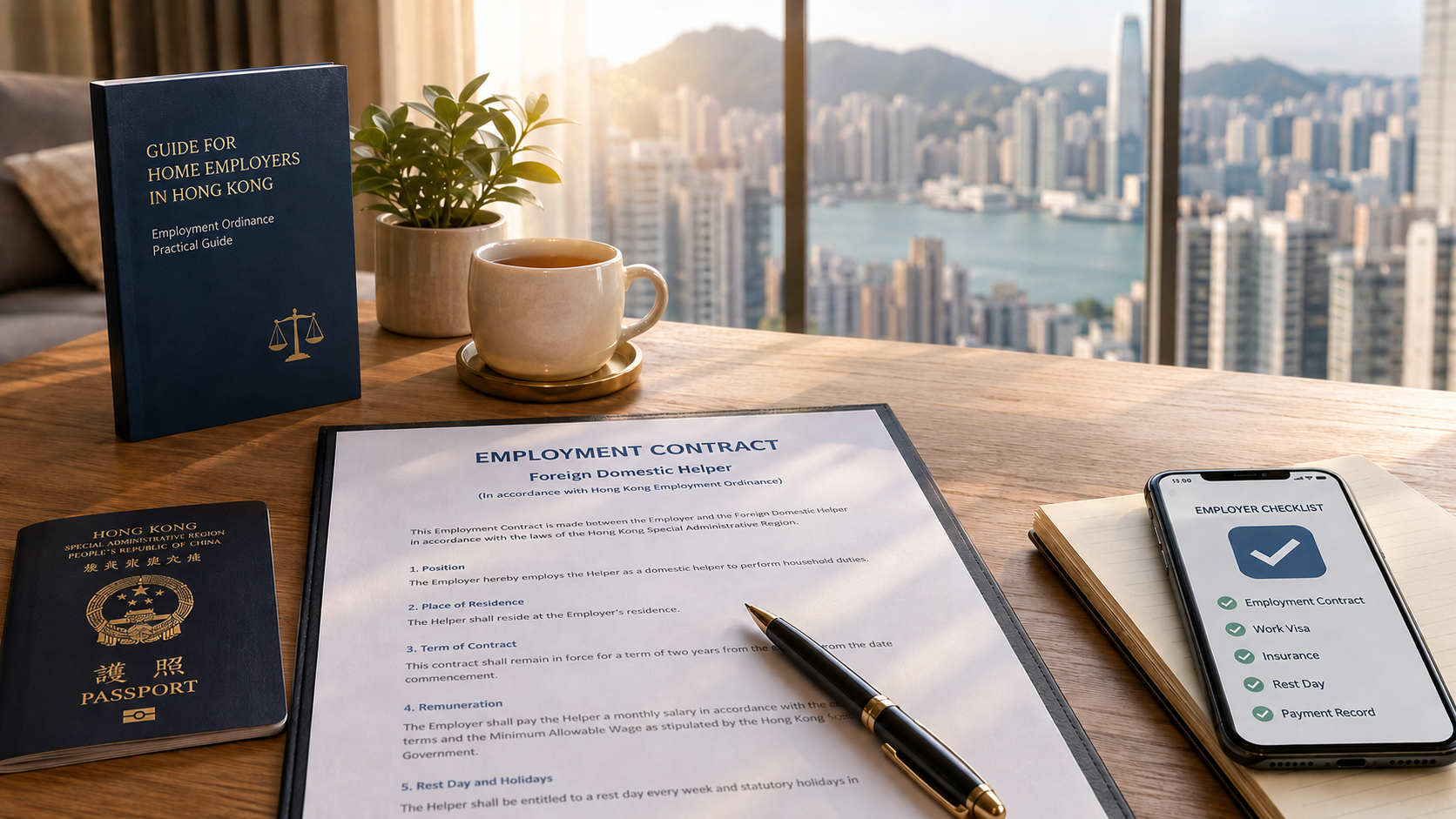
Immediate Legal Steps When Your Domestic Helper Goes Missing
In Hong Kong, Clause 12 of the Standard Employment Contract (ID407) requires swift action when a contract ends prematurely or is abandoned. Following these steps ensures you remain legally protected.
Handling Loan Sharks, Debt Collectors & Financial Recourse
A primary cause of FDHs running away in Hong Kong is falling into financial distress or illegal debt traps with unauthorized finance companies.
1. If Debt Collectors Contact You
-
Do NOT pay her debts: You are not legally responsible for your helper’s personal loans.
-
Show the collection agency a copy of your IMMD Form ID407E acknowledgment letter and the police report reference number proving she no longer resides or works at your address.
-
Contact the police immediately if you experience any harassment or intimidation.
Why Do Domestic Helpers Run Away? (Understanding the Root Causes)
It is important to understand that running away is rarely an impulsive choice—it is usually an agonizing, last-resort decision for a helper.
Leaving a household unannounced means risking her livelihood, legal status, and future employment in Hong Kong, putting her ability to send money home to her children and family in jeopardy. Helpers usually reach this breaking point due to severe, unresolved pressures:
-
Job Mismatch & Burnout: Unclear job scopes, continuous high-stress shifts without sufficient daily rest, or unrealistic household expectations.
-
Crushing Debt Burdens: Workers recruited through unethical agencies often carry heavy, illegal debt loads. The constant pressure from loan sharks or agency deductions causes severe emotional distress.
-
Bad Advice from Unlicensed Brokers: Misleading promises from illegal agents who convince distressed helpers that they can easily find higher-paying, freelance, or “cash-in-hand” jobs elsewhere in Hong Kong.
-
Isolation and Homesickness: Struggling with severe family emergencies back home while feeling unable to express her distress or request leave from her employer.
Tell-Tale Signs Your Helper May Be Struggling
Most helpers display warning signs before resorting to contract abandonment. By noticing these behavioral changes early, employers can step in and resolve issues before they escalate:
-
Sudden Behavioral Shift: Becoming unusually withdrawn, quiet, anxious, or emotionally tearful during daily tasks.
-
Frequent or Secretive Phone Calls: Receiving persistent, stressful phone calls from unknown numbers, often indicating pressure from money lenders or family crises.
-
Declining Work Performance: A noticeable drop in energy, extreme tiredness, or forgetfulness due to sleeplessness or anxiety.
-
Gradually Packing Belongings: Moving personal items, essential documents, or valuables out of her room bit by bit over several weeks.
-
Expressing Extreme Distress: Repeatedly mentioning that she cannot cope with the workload or expressing deep anxiety about her family’s financial situation.
Preventing Runaway Situations: Why Mutually Agreed Termination Is Better
Preventing worker departure starts during recruitment and continues through open communication. When friction arises, both parties should remember that a mutually agreed contract termination with a standard notice period (1 month’s notice or 1 month’s wages in lieu) is always a far better option than running away.
A mutual, legal termination protects the employer by allowing time to arrange a smooth handover or find a replacement. It also protects the helper by preserving her clean record with the Immigration Department (IMMD) so she can return home or re-apply for work legally without risking an overstaying ban or police involvement.
Proactive Prevention Strategies for Employers:
-
Set Clear Expectations Early: Transparently outline household size, daily schedules, rest days, and living arrangements during interviews.
-
Comply Fully with Hong Kong Employment Laws: Ensure compliance with the Minimum Allowable Wage (MAW) of HK$5,100/month (and HK$1,236/month food allowance, if applicable), statutory rest days, and private, suitable accommodation.
-
Maintain Open Communication: Conduct regular check-ins. If you notice she is struggling, offer a safe space to talk, adjust the workload, or discuss a peaceful, mutually agreed resignation if the job is simply not a good fit.
-
Zero Placement Fee Policy: Choose recruitment platforms like HelperChoice that strictly uphold a Zero Placement Fee policy for workers, ensuring your helper arrives debt-free, mentally secure, and focused on her work.
Building a Safer, Debt-Free Match with HelperChoice
Preventing employment breakdown begins with ethical recruitment and transparent matching. At HelperChoice, we eliminate the heavy agency fees and debt burdens that often cause worker distress by enforcing a strict Zero Placement Fee policy for all domestic workers. Whether you need to find a reliable new candidate or need guidance on legal IMMD contract processing for a helper you have already chosen, our team and accredited agency partners provide transparent, full-service support to help you build a stable, long-term employment relationship.
👉 Contact us for Ethical Hiring & Visa Processing Support